How to Make a Mobile Game: Process, Stages, Tips
KEY POINTS OF THE ARTICLE
- Introduction to the comprehensive process of game development, from concept to release.
- Importance of defining the game concept, including genre, style, features, characters, and target audience.
- Consideration of project logistics such as estimated costs, team size, and timelines.
- Emphasis on market analysis to ensure the game's viability and competitiveness.
- Development of a detailed Game Design Document (GDD) to guide the team through the project.
- Execution of the production phase, including coding, artwork creation, and sound integration.
- Implementation of rigorous testing to identify and fix bugs for a polished product.
- Strategies for a successful game launch, including marketing and distribution plans.
- Post-launch activities focusing on updates, community engagement, and ongoing support.
Mobile game development is one of the fastest-moving sectors in digital entertainment, shaped by rising player expectations, AI-assisted production, and increasingly competitive app stores. Success now depends on more than a strong concept - teams need a clear process, efficient production, and a launch plan built for retention as well as acquisition.
Unlike standard app development, game development gives you far more creative freedom, but it also demands tighter planning across design, engineering, art, testing, and live operations. Whether you're building an indie title or working with a studio like Whimsy Games, the development journey still follows a proven sequence of stages that can make or break the final result.
In this guide, we'll walk through the full game development process, from concept and pre-production to launch and post-release support, so you know exactly what to expect at each step.

Unsure Where to Begin??
Reach out to Us Today to Enhance Your Game's
Narrative and Captivate Your Audience Like Never Before!
Contact usTo develop mobile game may be intense yet interesting and challenging. However, all the negative aspects are easily outweighed by the delight of fulfillment and the product itself.
But how does the development process look? Are there any essential steps on the way to a successful game release? In this article, we will find this out and look at the main game development phases.
7 Mobile Game Development Phases
How to develop a mobile game? It’s a quite complicated yet very creative and alluring process. Creating a mobile game is not the same as building a common mobile application, as this process gives you more flexibility and allows for unleashing all of your original ideas. Each game is unique, with its original concept and aim.
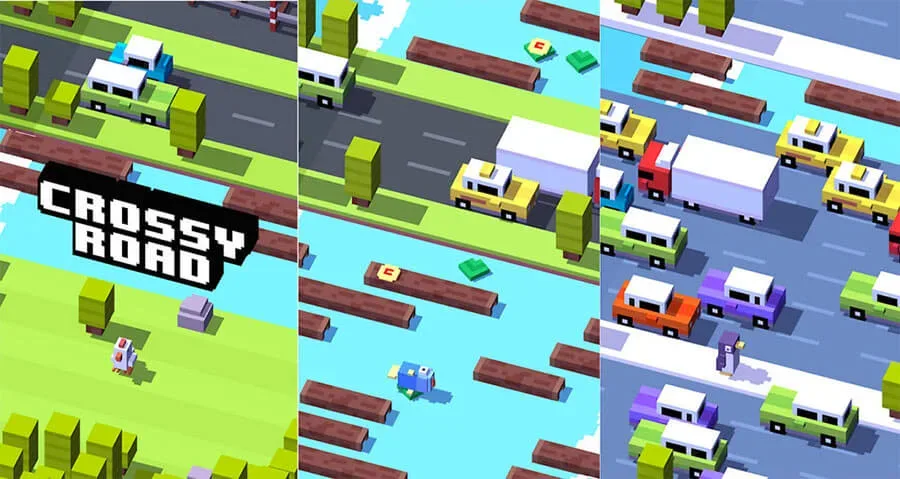
Some might argue that games that are not that important and mobile applications play a more significant role in our lives. Sometimes mobile applications make our daily routine easier, but mobile games add colors to our lives and bring us joy. For some, mobile gaming is a way to spend some free time; for some of us, games have become a way to deal with anxiety and get distracted from the stress. For example, a multiplayer game Crossy Road from Hipster Whale company. Many reviewers admit this game is a great way for stress relief and helps to calm down the anxiousness.
“The successful free-to-play games are selling positive emotions. Not content.”
– Nicholas Lovell, author of The Curve, founder of GAMESbrief, a consultant on new game business models.
But what is a game development process step by step? It is a long flow with several game development stages. Everything starts with the game concept development, followed by pre-production, production, testing, and pre-launch. The main stage of a development process is launch. Even after that, though, the process is not finished — a post-production phase usually follows.
Let’s look closer at all of the game development points and study each of them in detail.
Game Concept
The primal and one of the most important stages in step-by-step game development is the game design document. The unique and interesting game concept should be thought out before the script, the designs, and the development process begins.
What’s the first challenge a development team faces during the concept creating stage? Meeting the deadlines for the product development. In most cases, the project is seen as a set of in-game mechanics offered to a customer. However, some business properties like balance, testing, analytics, marketing, administration, resource management, and publishing are not considered. Inexperienced teams developing the game for the first time spend a lot on the concept step. Thus, they fail to meet the time-to-market criteria and admit a defeat.
Before you enter the process of developing a game, you should ask yourself and your team some of these questions:
- What kind of game should we produce?
- Which game style should we choose? 3D or 2D?
- What would be our key features?
- What kind of characters should we include?
- What would be the game’s setting?
- Who would be the target audience of the game?
- Which platform should we choose to build the game on?
Creating a game concept might be the most difficult step of game development as it gives a start to the prole process. Coming up with the original and competitive idea is an essential part of creating a successful game. It offers your team a chance to attract the audience’s attention and gives game publishers some guarantees of your success. Before the pre-production and production game development steps, you should also clarify the following:
- The estimated cost of the game;
- The technologies to use and team’s capabilities;
- The size of the development team;
- Will you need to outsource some of the processes?
- The predicted deadline and timeframes of each stage;
- The monetization. (Mind that even F2P games brought a total revenue of $73.8 in 2020).
Choosing the right technology stack is crucial; for instance, opting for unreal game development services can significantly enhance your game’s visual fidelity and performance.
Answering these questions on the first stage of your game development will help you minimize the losses and predict your expenses. And once everything is clear, you may start the pre-production stage.

Written by
Denys KliuchCEO
I'm a CEO and a Co-Founder of Whimsy Games. Before that, I advanced my expertise in engineering, management, traffic marketing, and analytics working for large game development studios with a $1M+ monthly income. With a clear vision of how game development should work, I run Whimsy Games, being responsible for the marketing and sales of our products and services.