Game design
AI assists in game design by automatically generating levels, enemies, quests, and other game elements.


Artificial Intelligence (AI) is quietly changing the world around us. And the world of game development, too. Can every AI user now create games of the highest quality? Certainly not. Can industry professionals use this new and powerful tool in their work? Absolutely, yes.
We at Whimsy Games have successfully used and applied AI in various aspects of game development – from procedural content generation to text-to-graphics conversion, from music and voice synthesis to dynamic storytelling, and from new game analytics tools to automated game-level testing.

AI assists in game design by automatically generating levels, enemies, quests, and other game elements.

AI is indispensable for developing single-type assets. It can also be a source of inspiration for creating characters, objects, or environments, reducing the time and effort required for manual creation.

Our AI game developers use machine learning to analyze game data, generate insights, and create unique LiveOps for players.
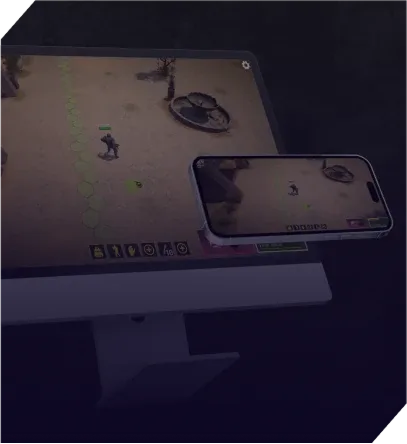
AI is handy in game testing while simulating player behavior and predicting the outcome of various actions.

We train AI to automatically detect and fix bugs in our games, reducing the need for manual testing and bug fixing.
We have experience using AI to generate human-sounding voices for characters in the game.
Faster Development Cycle: Whimsy Games use AI tools to streamline game development processes and automate repetitive tasks, allowing for a faster development cycle.
Improved Quality Assurance: with the help of AI tools, our team can perform detailed analyses of game assets, code, and other elements to identify potential issues and inconsistencies early in the development process.
Enhanced Creative Process: AI tools provide creative suggestions and ideas to our game developers, helping to spark new insights and approaches to game design.
Cost Savings: AI tools reduce the time and resources required for game development, lowering overall costs and improving the project’s ROI.

The first stage of game AI development involves coming up with the concept and mechanics of the game. Tools like OpenAI’s Dalle, Midjourney, and ChatGPT can generate ideas for the game by providing prompts such as setting, characters, and plot ideas.

This stage involves fleshing out the ideas generated in the first stage and turning them into a comprehensive design document. This document should outline the game’s mechanics, gameplay, and story. Tools like Open AI Codex and GitHub Copilot can be used to write code for the game mechanics and help design the game.

At this stage, our AI game developers creates a rough version of the game to test the mechanics and ensure that the game works as intended.

While creating the actual game based on the design document (which includes coding, creating assets, and implementing game mechanics), our team uses AI to significantly reduce the time and resources required to develop content manually.

This stage involves testing the game to ensure it is free of bugs and runs smoothly.

AI tools are used for game analytics and LiveOps development, as well as for multilingual support, creating promotional materials, and more.

Whimsy Games uses NLP to analyze player feedback and sentiment, allowing it to quickly identify critical issues and trends that can be addressed in future games.

We use ML to optimize game mechanics and progression, such as adjusting difficulty levels based on player behavior and preferences, to strengthen our AI game development (synthetic creatures with learning and reactive behaviors).

We train AI models that can recognize patterns in player behavior, including which features are most popular, which levels are most challenging, and which types of enemies are the most effective.

We at Whimsy Games use predictive analytics to forecast potential sales, identify target audiences, analyze player data, and optimize marketing strategies.
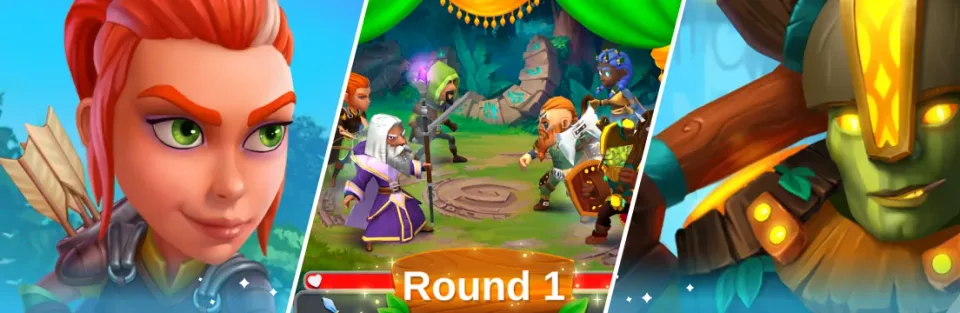
AI game development is used to create intelligent opponents capable of making strategic decisions and challenging players.

AI game development is used to generate realistic and immersive dialogue for non-player characters, making the gaming experience more engaging.

AI game development is used to create intelligent enemies that can adapt to the player’s actions, making the gaming experience more challenging and exciting.

AI game development is used to create puzzles that are more difficult to solve, providing a greater sense of accomplishment to the player when they are solved.
AI game development is used to create virtual characters that can interact with players in a more realistic and meaningful way, enhancing the social aspect of the game.

AI algorithms (such as procedural generation, adaptive difficulty, and virtual reality interactivity) can create new game mechanics and gameplay styles.
Enemy NPCs in first-person shooters use pathfinding algorithms to navigate the environment. Decision-making algorithms in strategy games determine opponents’ behavior. Adaptive difficulty in racing games that adjusts the difficulty level based on the player’s performance. Additionally, game development AI is used in sports games to simulate the behavior of opposing players.
Absolutely! Whether you’re brainstorming ideas, fine-tuning your game mechanics, or adding cool AI tech, we’re here to help you out!
Tell us what you're building. We'll come back within one business day with questions, a rough scope, and a 30-min call slot — no boilerplate, no sales loop.