AI and Procedural in GameDev: How Whimsy Games Builds Smarter Worlds
AI and procedural generation have moved from experimental features to core parts of how games are built. As of mid-2025, around 20% of new games on Steam disclose AI involvement - double the figure from a year earlier - and BCG estimates that approximately 50% of studios are now actively using AI tools in their pipelines.
For game developers, this shift is no longer a question of "if" but "how." The studios pulling ahead are those using AI deliberately: accelerating asset creation, improving NPC behaviour, automating QA, and reducing the manual overhead that inflates budgets and timelines. AAA development costs can reach $300 million - AI-assisted workflows are one of the few levers that meaningfully change that equation.
At Whimsy Games, AI game development is a core part of how we work across multiple project types. This article covers where these tools genuinely deliver, where they fall short, and what any studio should know before committing to an AI-assisted pipeline in 2026.
AI in Game Development: The New Standard
AI isn’t just about writing code or animating NPCs. It's deeply embedded in how modern games are visualized, structured, and delivered to players.
Let’s break it down by how we use it at Whimsy Games with practical, production-level examples.
smart ai game tech
Build future-ready games today
scale faster with procedural toolsstart your project1. AI in Game Art: Creating Faster Without Compromising Quality
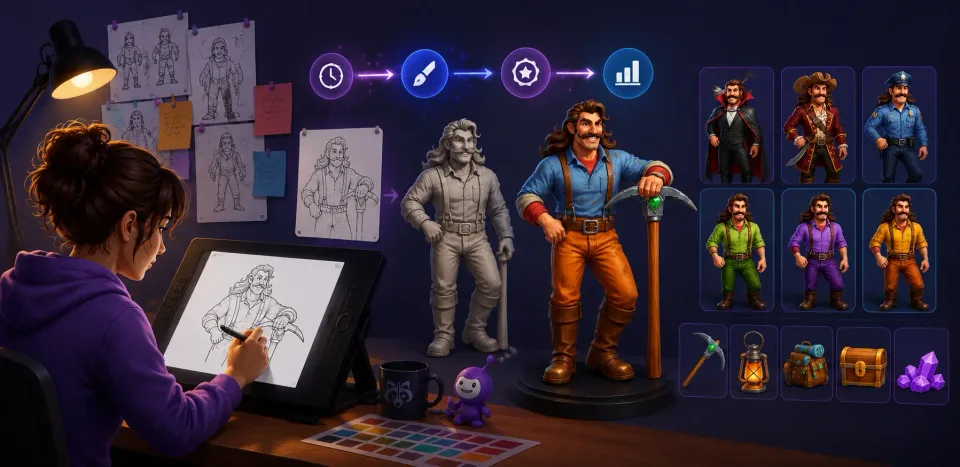
Art is where most teams feel the production bottleneck, especially when assets need to be customized, upscaled, or reworked for different platforms. We use AI to streamline the grind and leave more space for human creativity.
Key Use Cases:
- AI-Assisted Concepting:
Our artists use AI tools like Midjourney and Stable Diffusion to rapidly generate base concepts, style explorations, and visual moods. These aren’t final assets but they provide a fast, flexible sketchbook that saves days of manual trial-and-error. - Style Transfer and Consistency:
We use neural style transfer to quickly apply a visual style (e.g., cel-shading, pixel art, cyberpunk neon) to a set of sketches. It helps unify the look and feel early, without redesigning each asset manually. - Smart Upscaling for Multi-Platform Titles:
For mobile-to-PC ports or HD remasters, AI upscaling tools let us increase texture fidelity while preserving artistic intent - no need to recreate every pixel from scratch. - Bulk Prop Creation and Variants:
When a game needs 50 potion bottles or 100 furniture pieces, AI-assisted workflows allow us to quickly generate variations that meet gameplay and aesthetic needs and then refine them through human polishing.
2. AI in Gameplay Systems: Designing Smarter, Living Worlds
AI’s impact goes far beyond visuals. It’s transforming how games behave - how enemies learn, how worlds respond to players, and how content evolves.
What We Implement:
- Adaptive Enemy Behavior:
We’ve built enemy logic systems that analyze player movement, attack frequency, and weapon usage, then adapt. Think smarter, not harder: enemies that flank, flee, or combo based on your habits. - Procedural Dialogue and Narrative Branching:
Using GPT-style models, we generate modular conversations that adjust to player choices or stats. The result? Replayable dialogue that doesn’t sound robotic and saves weeks of writing. - Real-Time Difficulty Tuning:
Through machine learning, we analyze player performance (deaths, retries, combos) and adjust difficulty dynamically. This is key for keeping casual players engaged and hardcore players challenged. - Live-Ops Optimization:
AI models help predict when players are likely to churn, which events increase retention, and what rewards are most engaging - ideal for long-term content cycles.
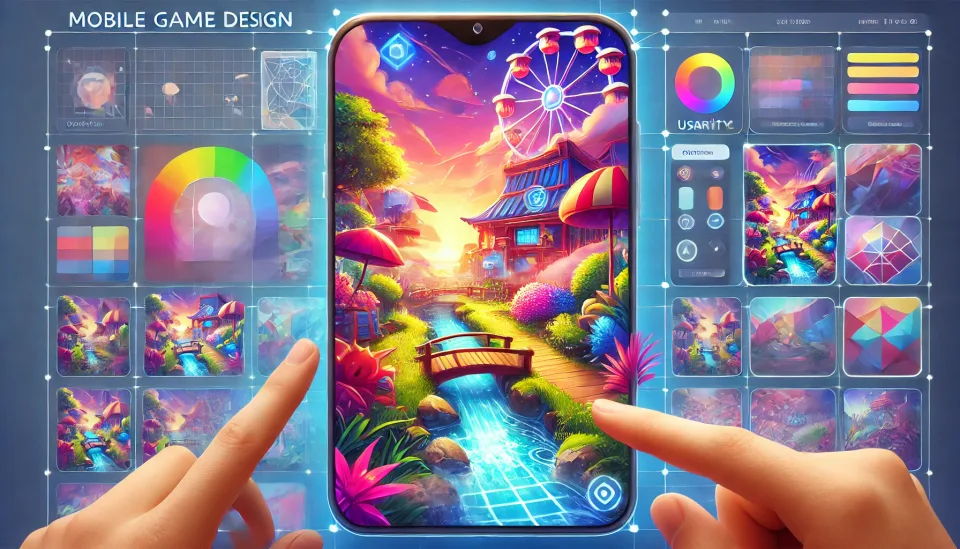
3. Procedural Generation: Infinite Content, Smart Rules
Procedural generation allows us to create massive, varied content libraries without designing each element by hand. Combined with AI, it becomes even more powerful.
What We Procedurally Generate:
- Levels and Maps:
Roguelikes, puzzle games, endless runners - we use rule-based procedural systems to create layouts that feel hand-crafted but are infinitely replayable. - Biomes, Terrain and Worldbuilding:
From lava caves to ice plains, we generate terrain with smart noise functions and hand-tuned constraints so the result feels natural, not random. - Items, Enemies, and Custom Traits:
Think 1,000+ combinations of weapons, loot, character abilities: all balanced and rule-checked by procedural logic. Great for RPGs and survival games.
Why This Approach Works for Our Clients
Speed Up Development Without Hiring Dozens
AI boosts production velocity - perfect for indie teams or mid-size studios needing fast iteration.
Reduce Costs and Revise Smarter
With AI, we reduce back-and-forth on art revisions and gameplay testing, fewer wasted hours = smaller bills.
Enable LiveOps-Ready Infrastructure
You can’t do long-term content without scalable systems. AI + procedural gives you the foundation.
Maintain High Quality, Not Cookie-Cutter Results
We combine automation with human oversight to ensure style, narrative, and game feel stay unique.
The Pros and Cons of Using AI in Game Development (2026 Update)
AI adoption in game development has accelerated sharply. According to BCG's Video Gaming Report 2026, around 50% of studios now use AI tools, and roughly 20% of new games on Steam disclose AI involvement - double the figure from a year earlier. The technology delivers real advantages, but it also introduces risks that studios need to manage carefully.
Pros
Faster development cycles. AI tools can accelerate content production by up to 90% in some workflows, according to game-generating tool vendors. Studios using AI for asset creation, QA automation, and code review report significant reductions in time-to-market.
Lower production costs. AAA game budgets can reach $300 million. AI-assisted pipelines reduce the volume of manual work required, making ambitious projects more viable for mid-size and independent studios.
Smarter NPCs and dynamic content. Generative AI enables NPCs with memory, personality, and adaptive dialogue - a meaningful leap beyond scripted behaviour. It also allows games to co-create content based on player choices, opening up new gameplay formats.
Live operations support. AI is particularly effective for managing live service games, helping studios update content, personalise player experiences, and automate QA across ongoing releases.
Cons
Market saturation risk. Faster, cheaper production means more games competing for player attention. BCG notes that blockbuster titles will need to work harder to stand out in an increasingly crowded market.
Quality and reputation concerns. Poor-quality, derivative AI-generated content can damage a studio's reputation - and the reputation of AI tooling more broadly. The speed advantage is only valuable if quality standards are maintained.
Intellectual property uncertainty. Copyright questions around AI-generated assets remain unresolved. Studios training models on third-party assets or code face potential legal exposure, particularly as major publishers push back.
Creative control trade-offs. Over-reliance on AI-generated content can reduce the distinctive creative voice that differentiates a studio's output. Human oversight and editorial judgment remain essential.
The Bottom Line
AI is a genuine productivity multiplier for game studios that use it deliberately. The risk is not the technology itself, but using it as a shortcut rather than a craft tool. Studios that combine AI efficiency with strong creative direction are best placed to benefit.
build smarter games
Procedural logic with AI power
Reduce costs, increase qualityContact usOur Philosophy on AI in Games
We see AI as a tool, not a shortcut.
At Whimsy Games, we combine it with:
- Human creativity
- Solid production pipelines
- Real player data
- In-house experiments
From Unity ML Agents to GPT-backed dialogues and Houdini procedural tools, we’re using what works, not chasing trends.
If it saves your team time and makes your game better, we use it.

Written by
Daria HoloskokovaMarketing Team Lead
I am an energetic Marketing Executive currently making waves at Whimsy Games, where my path is filled with vibrant growth and innovative strides. In this dynamic world of game development, I lead pivotal marketing strategies that have notably elevated our brand's visibility and successfully attracted essential Marketing Qualified Leads. My involvement is crucial in executing precise digital campaigns and developing compelling content, while also building strong partnerships with vendors and effectively working with various teams within our company.